
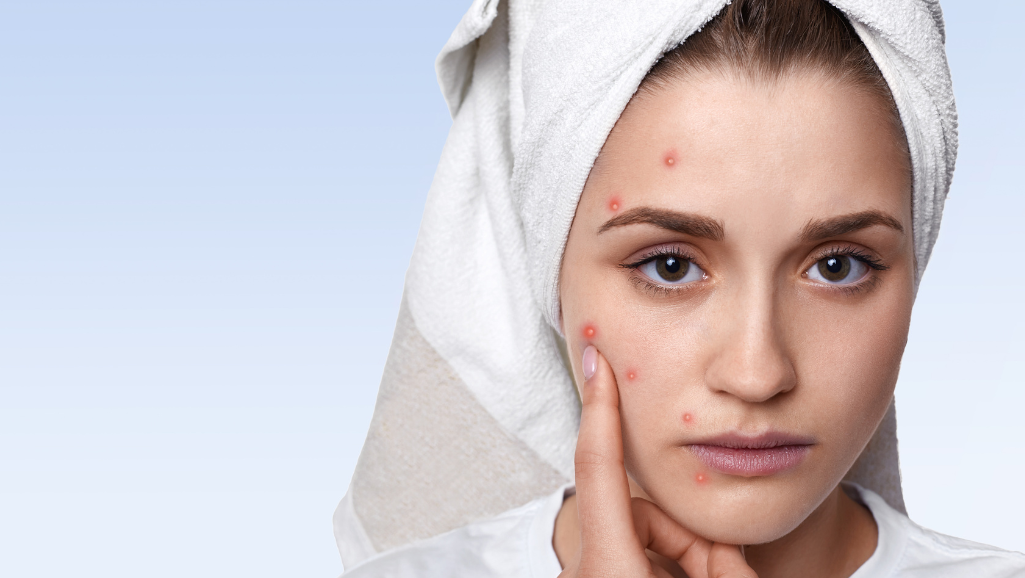
Acne vulgaris, commonly referred to as acne, is a chronic skin condition in which the skin’s oil and dead skin cells clog hair follicles.
Common symptoms of the condition include acne, scarring, dry skin, and blackheads or whiteheads. (2) (11 )
It mostly affects the skin on the face, upper chest, and back that has a lot of oil glands. Acne on the skin, especially the face, can cause anxiety, low self-esteem, and in extreme cases, depression. (3) (4)
Acne is the ninth most common disease in the world, affecting about 70 crore people annually. (9)
In the Western world, acne is a common adolescent disease that affects 80–90% of teenagers.
Certain rural populations have lower rates of acne than do urban areas. Both children and adults may be impacted, both before and after puberty. Even though acne grows less common with age, it still affects approximately half of adults in their twenties and thirties and a lower percentage of people in their forties. (2)
Acne Types According to Severity
A treatment plan for acne vulgaris can be determined by classifying the condition as mild, moderate, or severe. There is no commonly accepted standard for grading the severity of acne.
The presence of clogged skin follicles, or comedones, on the face along with sporadic inflammatory lesions is characterized as mild acne. (12) (13)
Moderate intensity acne is characterized by a greater number of inflammatory papules and pustules on the face as opposed to mild occurrences that only affect the trunk of the body.
Severe acne is defined as the main facial lesions being nodules (painful ‘bumps’ under the skin) with significant trunk involvement. (12) (13)
Alternative names for hidradenitis suppurativa (HS) and rosacea, respectively, are acne inversa and acne rosacea.
Acne Symptoms and Signs
Increased production of oily sebum by the skin, together with papules, comedones, microcomedones, pustules, and nodules (big papules) are the hallmarks of acne. The appearance of acne varies based on skin tone. It could result in social and psychological problems. (13)
1. Disfigurements
Scleral membrane inflammation results in acne scars. Dermal inflammation and aberrant healing are the causes of the scar. Although it can occur in any form of acne vulgaris, scarring is more frequently associated with severe acne.
The classification of acne scars is based on whether the acne lesion site experiences excessive collagen deposition or loss as a result of an uneven healing response to skin inflammation. (14) (15)
Atrophic acne scars, which make up about 75% of all acne scars, are the most prevalent type of scarring caused by acne. They have lost collagen due to the healing process. There are three forms of atrophic acne scars: rolling, boxcar, and ice-pick scars.
Boxcar scars are indentation scars with sharp margins that have an ovoid or spherical form. Their diameters vary from 1.5 to 4 mm. Ice-pick scars are thin (less than 2 mm across) deep scars that penetrate the dermis. Compared to ice-pick and boxcar scars, rolling scars are larger (4-5 mm across) and feature a wave-like depth pattern in the skin. (14) (15)
Rarely, hypertrophic scars are characterized by an increase in collagen content that happens after an erratic healing process. They appear to be lifted off the skin and firm.
Hypertrophic scars remain inside the original wound edges, whereas keloidal scars may produce scar tissue outside of the original wound margins. (14) (15)
Keloid scars from acne are more common in men and those with darker skin tones, and they usually occur on the trunk of the body. (14) (15)
2. Dispersion
Postinflammatory hyperpigmentation (PIH) is the term for the darkening of skin surrounding an inflamed nodular acne lesion after it heals. The skin appears darker as a result of inflammation stimulating melanocytes, which are specialized skin cells that create melanin pigment. Darker skinned individuals are more susceptible to PIH. (16)
Although the term “pigmented scar” is frequently used to characterize PIH, it is deceptive since it suggests that the color shift is irreversible. Additionally avoidable is PIH, which gradually goes away with nodule aggravation. Untreated PIH can persist for months, years, or even forever if the deeper layers of the skin are impacted.
Hyperpigmentation can result from even a tiny quantity of skin exposure to UV radiation from the sun. Regular use of sunscreen with an SPF of 15 or higher will help lower this risk. (16)
Reasons for Acne
There are no known clear-cut risk factors for the onset of acne aside from heredity. Stress, nutrition, infections, and hormones are a few possible secondary culprits. Research on how smoking affects the frequency and severity of acne has produced contradictory findings. Cleanliness or sunlight have no bearing on acne. (2)
1. Genetics
81% of population diversity in acne is attributed to heredity. Acne is typically highly hereditary. Research on acne in first-degree relatives and affected twins reveals a strong hereditary component to the disorder.
Multiple genes may play a role in an individual’s predisposition to acne, as the condition may not follow a traditional Mendelian inheritance pattern. (2) (12)
Variants of the interleukin-1 alpha (IL-1 alpha), CYP1A1, and tumor necrosis factor-alpha (TNF-alpha) genes are among the potential candidates.
Acne risk has been associated with the 308 G/A single nucleotide polymorphism, a mutation in the TNF gene. Apert’s syndrome is one of the uncommon genetic disorders that can cause acne. Severe acne may be associated with XYY syndrome. (12)
2. Hormones
Acne can arise as a result of hormonal activity, such as that which occurs during puberty and menstruation cycles.
During puberty, sex hormones called androgens grow, causing the skin follicle glands to enlarge and generate more oily sebum.
The androgen hormones testosterone, dihydrotestosterone (DHT), and dehydroepiandrosterone (DHEA) are associated with acne. (17)
High amounts of insulin-like growth factor 1 (IGF-1) and growth hormone (GH) are also associated with acne. (Second) People with Laron syndrome or complete androgen insensitivity syndrome (CAIS) do not develop acne, suggesting that both androgens and IGF-1 are necessary for acne development (low IGF-1 levels due to GH insensitivity).
Medical diseases such polycystic ovarian syndrome, congenital adrenal hyperplasia, and androgen-secreting tumors can generate a high-androgen state, which can lead to acne. (17) (18)
Androgen levels can rise during pregnancy, which increases the production of greasy sebum. Using anabolic steroids or undergoing testosterone replacement treatment (TRT) may cause acne as a side effect. Dietary supplements and over-the-counter bodybuilding products frequently contain anabolic steroids.
3. Infections
Although its precise function in the development of acne is unknown, the anaerobic bacterial species Cutibacterium acnes (previously Propionibacterium acnes) is involved. C.
There are subtypes of acne related to normal skin and subtypes related to mild to severe inflammatory acne. (2) (19)
When S. epidermidis and C. acnes cohabit, they clog pores and hair follicles and create an anaerobic environment that encourages the growth of these bacteria beneath the skin’s surface, forming biofilms.
Treatment for acne becomes much more challenging when a biofilm matrix is formed as a result of C. acnes development. (19)
4. Nutritional Practices
There is evidence to suggest that diets high in glucose have variable effects on acne severity. Numerous nonrandomized research studies and randomized controlled trials have demonstrated the effectiveness of a lower-glycemic-load diet in reducing acne. (7)
There aren’t many research examining the relationship between acne and fat. Excessive daily consumption of vitamin B12 might worsen pre-existing acne or result in acne-like skin lesions known as acne-like eruptions. (19)
A meta-analysis released in 2021 found that while fatty acids, fruit, and vegetable consumption are acne-protective, high-glycemic diets, dairy products, fat foods, and chocolate are acne-promoting factors. (2)
5. Stress Only a small number of excellent studies demonstrate that stress causes or exacerbates acne. Although it is debatable, some research points to a possible connection between high stress levels and increased acne occurrence in some situations, such as hormonal changes associated with premenstrual syndrome.
6.Other Reasons
Acne that already exists may worsen if helmets or chin straps mechanically block skin follicles.
Many medications might make pre-existing acne worse. These medications include lithium, hydantoin, isoniazid, glucocorticoids, iodides, bromides, and testosterone.
Acne’s clinical diagnosis
Based on a medical professional’s clinical evaluation, acne vulgaris is diagnosed. When assessing a person who may have acne, a thorough medical history including any family history of acne, a review of medications taken, and indications of elevated androgen hormone, cortisol, and growth hormone production should all be considered. First of all
For acne to be diagnosed, comedones—black and whiteheads—must be present. Comedones are indicative of skin problems other than acne when they are absent.
Acne Treatment
Treatments for acne might vary widely. Acne therapies include reducing inflammation, regulating hormones, eliminating C. acnes, and restoring normal skin cell shedding and sebum production in the pore to prevent obstruction.
It is advised to treat acne vulgaris first with topical retinoids, benzoyl peroxide, and oral or topical antibiotics. Procedures like light treatment and laser therapy are usually utilized as supplements rather than as first-line therapies due to their high cost and lack of proof.
1. Skin Care Protocols
Generally speaking, acne sufferers shouldn’t wash their afflicted skin more than twice daily. On delicate and acne-prone skin, using a fragrance-free moisturizer will assist to reduce irritation. (20)
Skin irritation brought on by acne medications usually peaks two weeks after initial usage and gets better with ongoing use. Use makeup that is oil-free, non-comedogenic, and won’t clog your pores, according to dermatologists. (20)
2. Nutrition
Acne and other dermatologic problems seem to be less common and severe when treated with medical diet therapy. Research indicates that high-glycemic diets may be associated with acne. (19)
Dermatologists also advise against eating a diet high in simple sugars to help with acne. The evidence for using milk limitation for this goal was insufficient as of 2014.
3. Medications
A) Peroxide benzoylec
Benzoyl peroxide (BPO) is a first-line treatment for mild to severe acne (mostly skin irritation) due to its effectiveness and few side effects. By oxidizing the proteins in the skin follicle, benzoic acid, oxygen free radicals, and proteins are produced, which is how benzoyl peroxide kills C. acnes. These free radicals are probably going to have an impact on the bacterium’s metabolism and capacity to generate proteins. (21)
B) Ocular pigments
Retinoids are anti-inflammatory medications that decrease the production of sebum and aid in restoring the follicle cell life cycle. They resemble vitamin A in structure. Retinoids appear to have an impact on the follicular lining cell life cycle. This prevents skin cells from building up and obstructing the hair follicle. (22)
They’re a standard treatment for acne, especially for those with darker skin tones. It is well recognized that retinoid pigmentation improves more quickly after an inflammatory response. (1) (22)
Topical retinoids such as tretinoin, retinol, tazarotene, trifarotene, and adjapalene are used to treat acne. For mild acne that is resistant to other therapies, as well as for severe nodular acne, isotretinoin is an oral retinoid that works wonders. (22)
C) Medication for infections
To treat acne, antibiotics can be taken orally or administered topically. They lessen irritation and eradicate C. acnes. Dermatologists should employ antibiotics in conjunction with other therapies rather than by themselves because antibiotic-resistant germs are common. (93)
Whether applied topically or taken orally (e.g., doxycycline or minocycline), some of the most often used antibiotics are clindamycin, erythromycin, metronidazole, sulfacetamide, and tetracyclines. When administered topically, the antibiotic dapsone effectively treats inflammatory acne. (93)
D) Hormonal Agents Women with acne may benefit from taking birth control tablets in combination. Both progestin and estrogen are found in these drugs. They work by lowering the amount of androgen hormone that the ovaries produce as well as the free, physiologically active components of androgens. This lowers the amount of sebum that is produced on the skin, which lessens the severity of acne. (24)
Cyproterone acetate and spironolactone, two antiandrogens, are beneficial in treating acne, particularly in women who exhibit symptoms of excess androgen production, such as increased hairiness, skin-surface oil production, or scalp hair loss. (10)
For female acne, flutamide, a pure androgen receptor antagonist, works well. It tends to improve acne symptoms by 80 to 90% at low levels as well; some studies demonstrate complete elimination of acne. (25)
Antiandrogens can cause birth problems including hypopadias and feminize male newborns, hence they should not be used to treat acne in pregnant or nursing women. Women who are sexually active and may or may not become pregnant should use an adequate method of contraception when taking an antiandrogen to prevent pregnancy. (26) (27)
E) Acid azelaic
Applying azelaic acid topically at a dosage of 20% can help with mild to moderate acne. Azelaic acid is a crucial acne treatment because of its capacity to reduce skin cell aggregation in the follicle in addition to its antibacterial and anti-inflammatory properties. (1) (28)
It has a somewhat lighter skin tone since it can prevent the creation of melanin. It is therefore helpful in treating acne sufferers who also have post-inflammatory hyperpigmentation. (1) (28)
F) Acid salicylic
One keratolytic beta-hydroxy acid that can be used topically to stop bacterial growth is salicylic acid. Salicylic acid promotes the shedding of epithelial skin cells and unclogs skin pores. Dry skin is the most frequent side effect of topical treatment, while darker skin types can experience skin discoloration. (1) (29)
G) Additional Medication
Topical and oral forms of nicotinamide (Vitamin B3) are examples of alternative medical treatments. Nicotinamide is thought to aid with acne because of its anti-inflammatory qualities, capacity to prevent the production of sebum, and wound-healing capabilities. (30)
Oral and topical zinc formulations are suggested as treatments for acne. Acne is supposed to be treated by zinc’s anti-inflammatory and anti-sebum qualities as well as its capacity to stop the growth of C. acnes.(31)
Antihistamines can benefit those on isotretinoin because of its anti-inflammatory qualities and capacity to inhibit the production of sebum. (32)
By blocking tyrosinase, the enzyme that converts the amino acid tyrosine into the skin pigment melanin, hydroquinone lightens the skin when administered topically. It is applied to post-inflammatory hyperpigmentation caused by acne. (33)
4. Alternative Solutions
Low-quality research suggests that topical application of tea tree oil or bee venom can lower the overall number of skin lesions in acne sufferers. While tea tree oil has been connected to allergic contact dermatitis, its effectiveness is generally comparable to that of benzoyl peroxide or salicylic acid. Certain plant-based therapies have demonstrated efficacy in treating acne, including seaweed and basil oil. (34)
The efficacy of cupping therapy, herbal medicine, and acupuncture in treating acne is not well supported by research.
There are many different kinds of over-the-counter medications, or cosmetics. Some makeup can be used to cover up acne. People who have oily skin also prefer products that are water-based.
The Effects of Acne on Society
Both socially and financially, acne is very expensive. approximately 5 million doctor visits and approximately US$2.5 billion in direct costs are attributed to acne vulgaris annually in the US. (35) People frequently misunderstand the causes and aggravating elements of acne, and they frequently hold acne sufferers responsible for their condition. Such blame may have a detrimental effect on the victim’s self-esteem.
References:
1. Vary JC (November 2015). “Selected Disorders of Skin Appendages–Acne, Alopecia, Hyperhidrosis”. The Medical Clinics of North America (Review). 99 (6): 1195–211. doi:10.1016/j.mcna.2015.07.003. PMID 26476248.
2. Bhate K, Williams HC (March 2013). “Epidemiology of acne vulgaris”. The British Journal of Dermatology (Review). 168 (3): 474–85. doi:10.1111/bjd.12149. PMID 23210645. S2CID 24002879.
3. Barnes LE, Levender MM, Fleischer AB, Feldman SR (April 2012). “Quality of life measures for acne patients”. Dermatologic Clinics (Review). 30 (2): 293–300, ix. doi:10.1016/j.det.2011.11.001. PMID 22284143.
4. Goodman G (July 2006). “Acne and acne scarring – the case for active and early intervention”. Australian Family Physician (Review). 35 (7): 503–4. PMID 16820822. Archived from the original on 21 April 2013.
5. James WD (April 2005). “Clinical practice. Acne”. The New England Journal of Medicine (Review). 352 (14): 1463–72. doi:10.1056/NEJMcp033487. PMID 15814882.
6. Kahan S (2008). In a Page: Medicine. Lippincott Williams & Wilkins. p. 412. ISBN 9780781770354. Archived from the original on 6 September 2017.
7. Mahmood SN, Bowe WP (April 2014). “[Diet and acne update: carbohydrates emerge as the main culprit]”. Journal of Drugs in Dermatology (Review). 13 (4): 428–35. PMID 24719062.
8. Titus S, Hodge J (October 2012). “Diagnosis and treatment of acne”. American Family Physician (Review). 86 (8): 734–40. PMID 23062156. GBD 2015 Disease Injury Incidence Prevalence Collaborators (October 2016). “Global, regional, and national incidence, prevalence, and years lived with disability for 310 diseases and injuries, 1990-2015: a systematic analysis for the Global Burden of Disease Study 2015”. Lancet. 388 (10053): 1545–1602. doi:10.1016/S0140-6736(16)31678-6. PMC 5055577. PMID 27733282.
9. Aslam I, Fleischer A, Feldman S (March 2015). “Emerging drugs for the treatment of acne”. Expert Opinion on Emerging Drugs(Review). 20 (1): 91–101. doi:10.1517/14728214.2015.990373. PMID 25474485. S2CID 12685388.
10. Tuchayi SM, Makrantonaki E, Ganceviciene R, Dessinioti C, Feldman SR, Zouboulis CC (September 2015). “Acne vulgaris”. Nature Reviews. Disease Primers. 1: 15033. doi:10.1038/nrdp.2015.33. PMID 27227877. S2CID 44167421
11. Tuchayi SM, Makrantonaki E, Ganceviciene R, Dessinioti C, Feldman SR, Zouboulis CC (September 2015). “Acne vulgaris”. Nature Reviews. Disease Primers. 1: 15033. doi:10.1038/nrdp.2015.33. PMID 27227877. S2CID 44167421.
12. Dawson AL, Dellavalle RP (May 2013). “Acne vulgaris”. BMJ (Review). 346 (5): 30–33. doi:10.1136/bmj.f2634. JSTOR 23494950. PMID 23657180. S2CID 5331094.
13. Zaenglein AL, Graber EM, Thiboutot DM (2012). “Chapter 80 Acne Vulgaris and Acneiform Eruptions”. In Goldsmith, Lowell A., Katz, Stephen I., Gilchrest, Barbara A., Paller, Amy S., Lefell, David J., Wolff, Klaus (eds.). Fitzpatrick’s Dermatology in General Medicine (8th ed.). New York: McGraw-Hill. pp. 897–917. ISBN 978-0-07-171755-7.
14. Fife D (April 2016). “Evaluation of Acne Scars: How to Assess Them and What to Tell the Patient”. Dermatologic Clinics (Review). 34 (2): 207–13. doi:10.1016/j.det.2015.11.009. PMID 27015781.
15. Levy LL, Zeichner JA (October 2012). “Management of acne scarring, part II: a comparative review of non-laser-based, minimally invasive approaches”. American Journal of Clinical Dermatology (Review). 13 (5): 331–40. doi:10.2165/11631410-000000000-00000. PMID 22849351. S2CID 41448330.
16. Chandra M, Levitt J, Pensabene CA (May 2012). “Hydroquinone therapy for post-inflammatory hyperpigmentation secondary to acne: not just prescribable by dermatologists”. Acta Dermato-Venereologica (Review). 92 (3): 232–5. doi:10.2340/00015555-1225. PMID 22002814.
17. Das S, Reynolds RV (December 2014). “Recent advances in acne pathogenesis: implications for therapy”. American Journal of Clinical Dermatology (Review). 15 (6): 479–88. doi:10.1007/s40257-014-0099-z. PMID 25388823. S2CID 28243535.
18. Housman E, Reynolds RV (November 2014). “Polycystic ovary syndrome: a review for dermatologists: Part I. Diagnosis and manifestations”. Journal of the American Academy of Dermatology (Review). 71 (5): 847.e1–847.e10, quiz 857–8. doi:10.1016/j.jaad.2014.05.007. PMID 25437977.
19. Bhate K, Williams HC (April 2014). “What’s new in acne? An analysis of systematic reviews published in 2011-2012”. Clinical and Experimental Dermatology (Review). 39 (3): 273–7, quiz 277–8. doi:10.1111/ced.12270. PMID 24635060. S2CID 29010884.
20. Zaenglein AL (October 2018). “Acne Vulgaris”. The New England Journal of Medicine (Review). 379 (14): 1343–1352. doi:10.1056/NEJMcp1702493. PMID 30281982. S2CID 52914179.
21. Gamble R, Dunn J, Dawson A, Petersen B, McLaughlin L, Small A, et al. (June 2012). “Topical antimicrobial treatment of acne vulgaris: an evidence-based review”. American Journal of Clinical Dermatology (Review). 13 (3): 141–52. doi:10.2165/11597880-000000000-00000. PMID 22268388. S2CID 5838346.
22. Riahi RR, Bush AE, Cohen PR (June 2016). “Topical Retinoids: Therapeutic Mechanisms in the Treatment of Photodamaged Skin”. American Journal of Clinical Dermatology (Review). 17 (3): 265–76. doi:10.1007/s40257-016-0185-5. PMID 26969582. S2CID 12663356.
23. Barbieri JS, Spaccarelli N, Margolis DJ, James WD (February 2019). “Approaches to limit systemic antibiotic use in acne: Systemic alternatives, emerging topical therapies, dietary modification, and laser and light-based treatments”. Journal of the American Academy of Dermatology (Review). 80 (2): 538–549. doi:10.1016/j.jaad.2018.09.055. PMC 6333507. PMID 30296534.
24. Kamangar F, Shinkai K (October 2012). “Acne in the adult female patient: a practical approach”. International Journal of Dermatology. 51 (10): 1162–74. doi:10.1111/j.1365-4632.2012.05519.x. PMID 22994662. S2CID 5777817.
25. Bettoli V, Zauli S, Virgili A (July 2015). “Is hormonal treatment still an option in acne today?”. The British Journal of Dermatology. 172 Suppl 1: 37–46. doi:10.1111/bjd.13681. PMID 25627824. S2CID 35615492.
26. Azarchi S, Bienenfeld A, Lo Sicco K, Marchbein S, Shapiro J, Nagler AR (June 2019). “Androgens in women: Hormone-modulating therapies for skin disease”. Journal of the American Academy of Dermatology. 80 (6): 1509–1521. doi:10.1016/j.jaad.2018.08.061. PMID 30312645.
27. Kong YL, Tey HL (June 2013). “Treatment of acne vulgaris during pregnancy and lactation”. Drugs (Review). 73 (8): 779–87. doi:10.1007/s40265-013-0060-0. PMID 23657872. S2CID 45531743.
28. Sieber MA, Hegel JK (November 2013). “Azelaic acid: Properties and mode of action”. Skin Pharmacology and Physiology (Review). 27 Suppl 1 (Supplement 1): 9–17. doi:10.1159/000354888. PMID 24280644. S2CID 8848543.
29. Madan RK, Levitt J (April 2014). “A review of toxicity from topical salicylic acid preparations”. Journal of the American Academy of Dermatology (Review). 70 (4): 788–792. doi:10.1016/j.jaad.2013.12.005. PMID 24472429.
30. Rolfe HM (December 2014). “A review of nicotinamide: treatment of skin diseases and potential side effects”. Journal of Cosmetic Dermatology (Review). 13 (4): 324–8. doi:10.1111/jocd.12119. PMID 25399625. S2CID 28160151.
31. Brandt S (May 2013). “The clinical effects of zinc as a topical or oral agent on the clinical response and pathophysiologic mechanisms of acne: a systematic review of the literature”. Journal of Drugs in Dermatology (Review). 12 (5): 542–5. PMID 23652948.
32. Layton AM (April 2016). “Top Ten List of Clinical Pearls in the Treatment of Acne Vulgaris”. Dermatologic Clinics (Review). 34 (2): 147–57. doi:10.1016/j.det.2015.11.008. PMID 27015774.
33. Chandra M, Levitt J, Pensabene CA (May 2012). “Hydroquinone therapy for post-inflammatory hyperpigmentation secondary to acne: not just prescribable by dermatologists”. Acta Dermato-Venereologica (Review). 92 (3): 232–5. doi:10.2340/00015555-1225. PMID 22002814.
34. Cao H, Yang G, Wang Y, Liu JP, Smith CA, Luo H, Liu Y (January 2015). “Complementary therapies for acne vulgaris”. The Cochrane Database of Systematic Reviews (Systematic Review & Meta-Analysis). 1: CD009436. doi:10.1002/14651858.CD009436.pub2. PMC 4486007. PMID 25597924.
35. Knutsen-Larson S, Dawson AL, Dunnick CA, Dellavalle RP (January 2012). “Acne vulgaris: pathogenesis, treatment, and needs assessment”. Dermatologic Clinics (Review). 30 (1): 99–106, viii–ix. doi:10.1016/j.det.2011.09.001. PMID 2211787
© 2023 Medi Factory Design & Developed by Ovationthemes